
Generic
ESP32-CAM 2640 WiFi Bluetooth Development Board With 2MP Camera Module For Arduino IoT Projects - RS2288
ESP32-CAM 2640 WiFi Bluetooth Development Board With 2MP Camera Module For Arduino IoT Projects - RS2288
SKU:RS2288
53 in stock
Couldn't load pickup availability
- For Bulk Order Click Here
- Need Customer Support?
- Free Delivery Above 999/-
Note: In case you receive a damaged or faulty product, please return it in the original box with all foam and packaging. Returns will not be accepted if further damage occurs due to improper packing.
If you order a product that is currently in Preorder, and the price of that item increases in the future, you will be required to pay the difference in price.
For refund/return/replacement, call us at +91 95995 94520 or email us at support@rees52.com
Delivery Time
Delivery Time
- Delivery time with the Express Shipping option is 2-3 working days, and with the Standard Shipping option is 5-6 working days. It varies based on location, reliant on courier services.
- Delivery time if the order item is on Preorder Status is 15-20 working days.
COD (Cash on Delivery)
COD (Cash on Delivery)
- For COD you have to pay extra charges of Rs 350/- before the shipment. (We will share the company QR Code, UPI ID or Account details for the same)
Description:
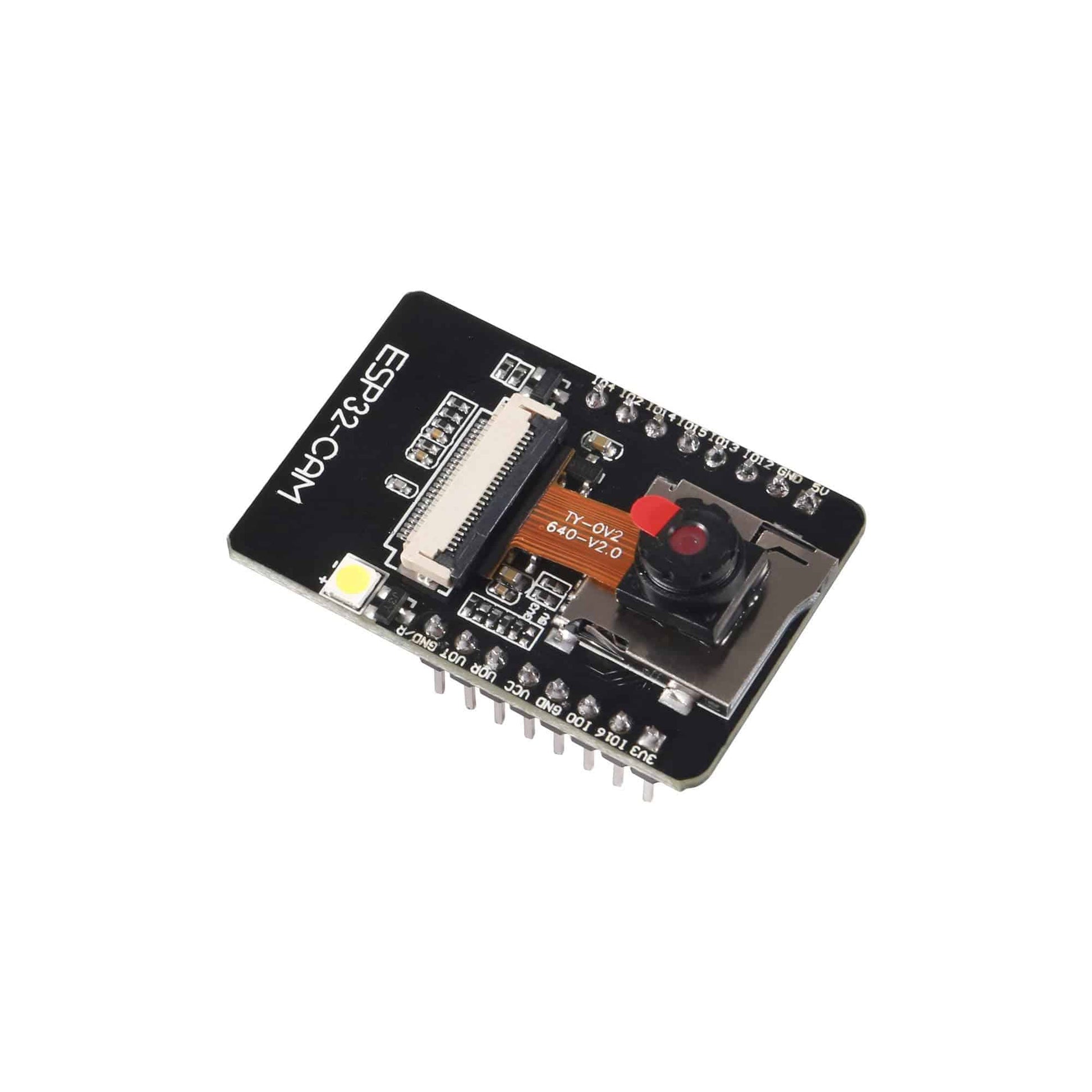
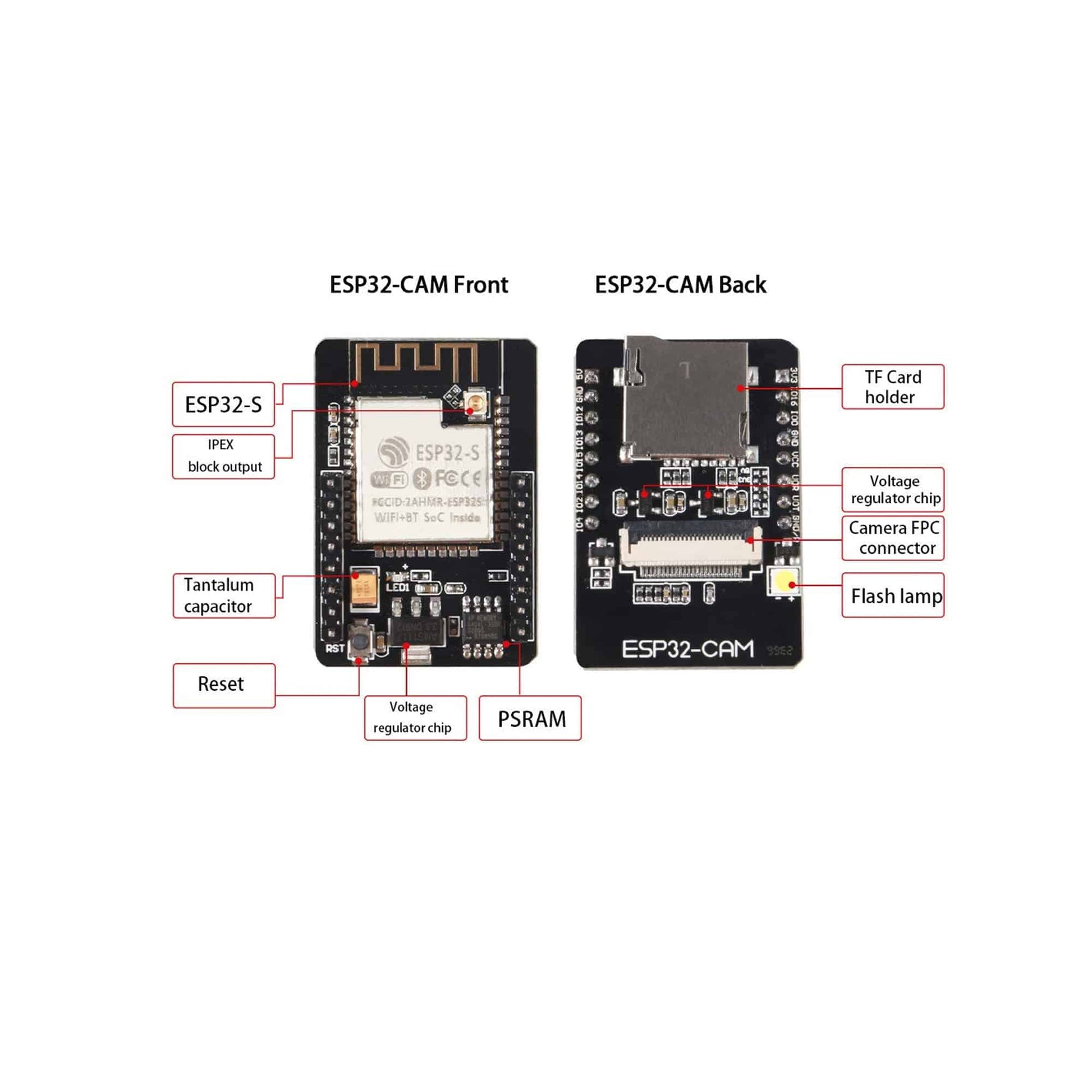
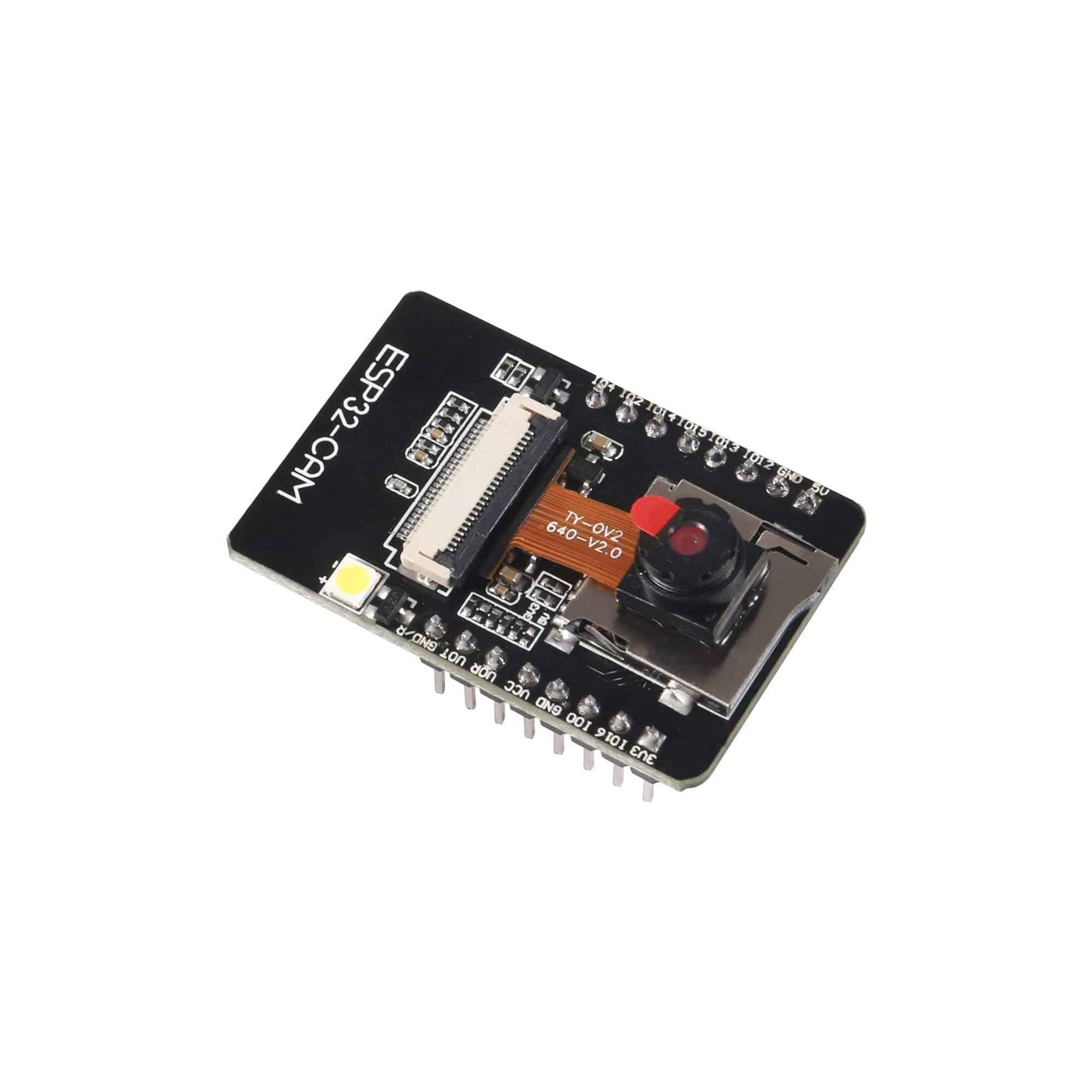
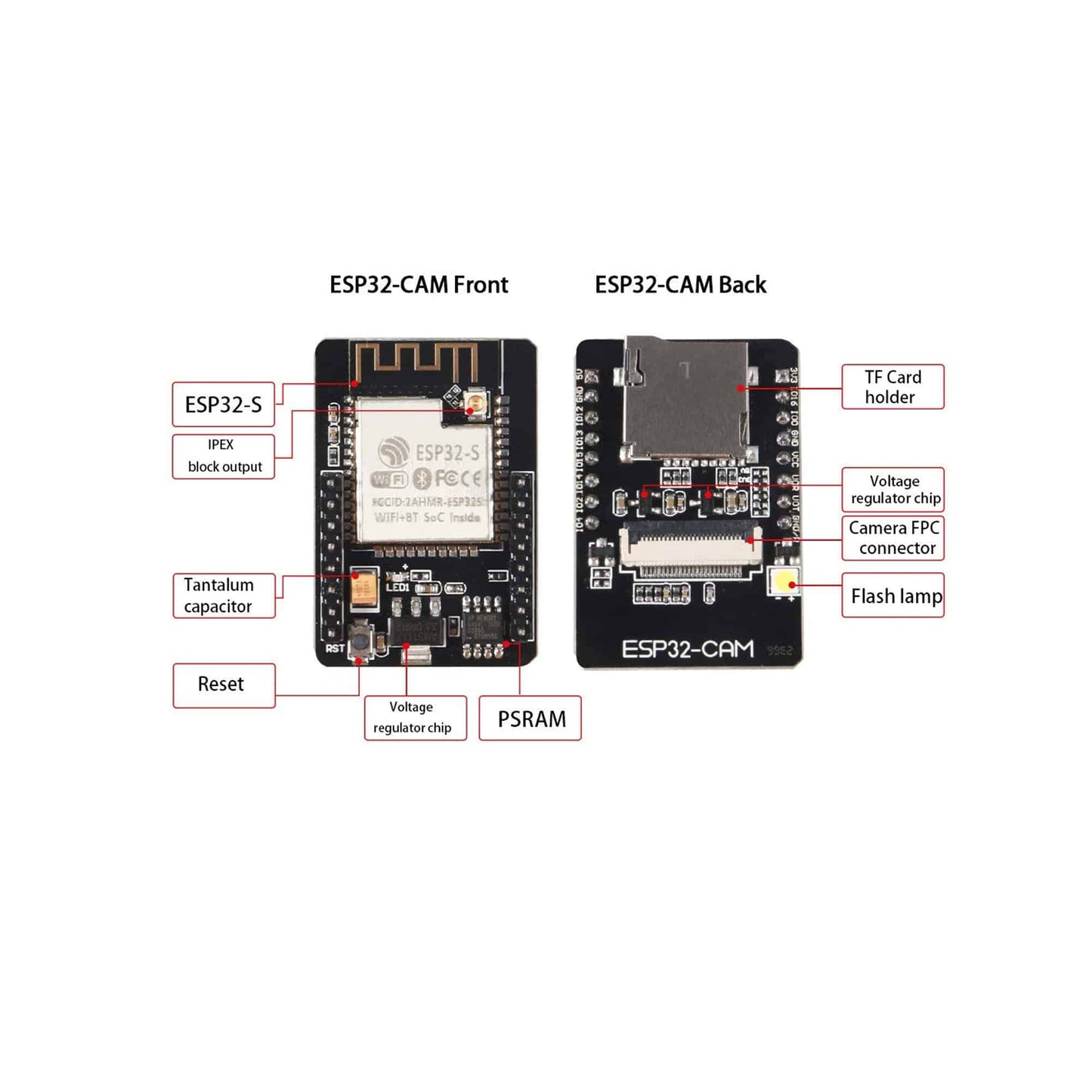
ESP32-CAM is a WiFi And a Bluetooth dual-mode development board that uses PCB onboard antennas and cores based on ESP32 chips. The ESP32 Cam can work independently as a minimum system. ESP integrates WiFi, traditional Bluetooth and BLE beacons with 2 high-performance 32-bit LX6 CPUs, 7-stage pipeline architecture, main frequency adjustment range 80MHz to 240MHz, on-chip sensors, Hall sensors, temperature sensors, etc.
The ESP32 Cam is fully compliant with WiFi 802.11b/g/n/e/i and Bluetooth 4.2 standards; it can be used in master mode to build an independent network controller or as a slave to other host MCUs to add networking capabilities to existing devices. The ESP32-CAM can be widely used in various IOT applications. The ESP32 Cam is suitable for home smart devices, industrial wireless control, wireless monitoring, QR wireless identification, wireless positioning system signals, and other IOT applications. The ESP32 Cam is an ideal solution for IOT applications.
Specifications:
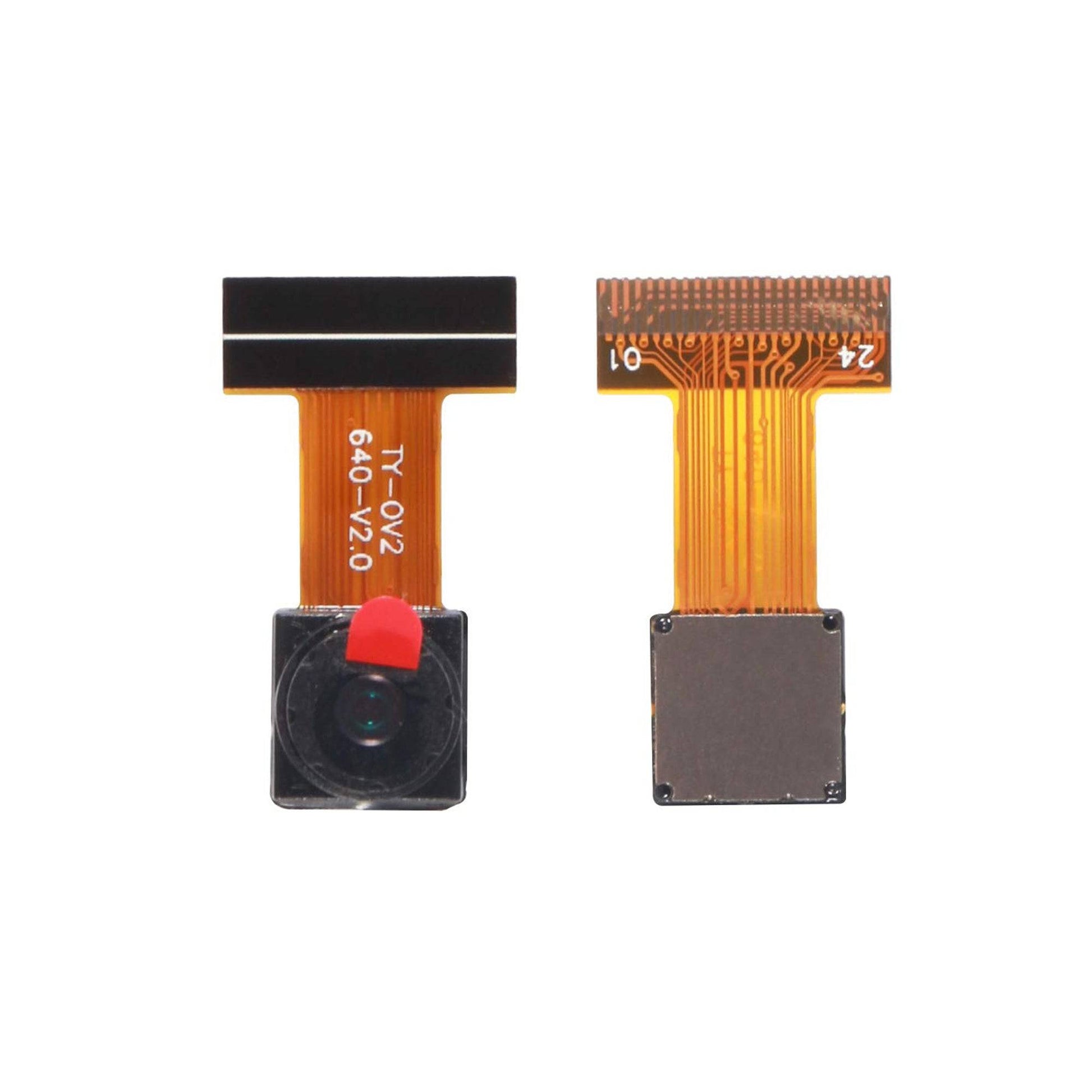
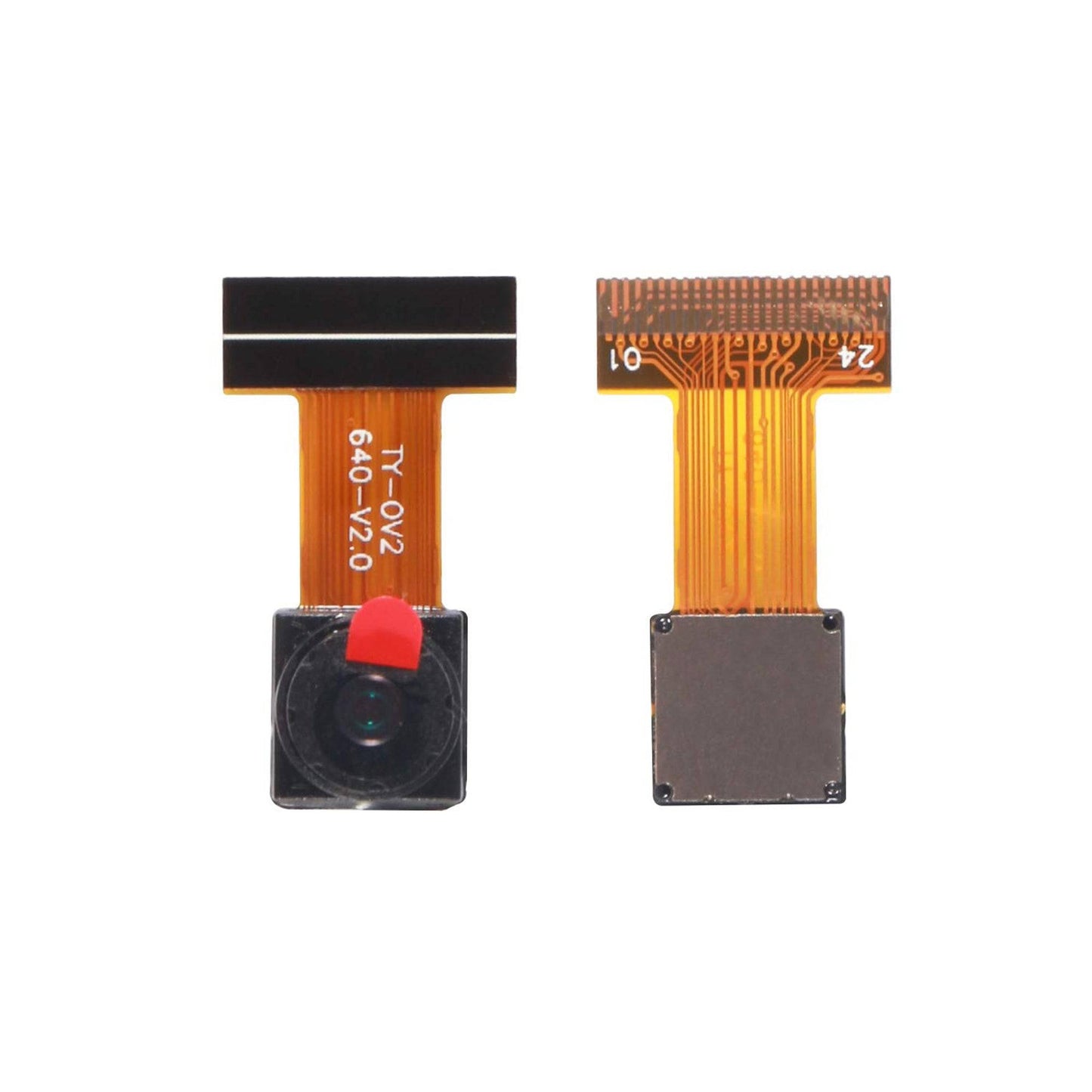
- Camera Sensor: OV2640 2MP Camera Module
- Microcontroller: ESP32
- SPI Flash default: 32Mbit
- RAM: Internal 520 KB + external 4 M PSRAM
- Bluetooth: Bluetooth 4.2BR/EDR and BLE standards
- Wi-Fi: 802.11 b/g/n/e/i
- Support Interface: UART, SPI, I2C, PWM
- Support TF card: Maximum support 4G
- IO Port: 9
- Security: WPA/WPA2/WPA2-Enterprise/WPS
- Power Supply Range: 5V
- Operating Temperature: -20°C ~ 85°C
Features:
- Ultra-small 802.11b/g/n Wi-Fi + BT/BLE SoC module
- Low-power dual-core 32-bit CPU for application processors
- Up to 240MHz, up to 600 DMIPS
- Built-in 520 KB SRAM, external 4 M PSRAM
- Supports interfaces such as UART/SPI/I2C/PWM/ADC/DAC
- Support OV2640 and OV7670 cameras with built-in flash
- Support for images WiFi upload
- ESP32 Cam supports TF card
- Support multiple sleep modes
- Embedded Lwip and FreeRTOS
- ESP32 Cam supports STA/AP/STA+AP working mode
- Support Smart Config/Air Kiss One-click distribution network
- Support for serial local upgrade and remote firmware upgrade (FOTA)
- ESP32 Cam supports secondary development