


vendor-unknown
Control the Bulb using LDR and Relay Module - KT623
Control the Bulb using LDR and Relay Module - KT623
SKU:KT623
999 in stock
Couldn't load pickup availability
- For Bulk Order Click Here
- Need Customer Support?
- Free Delivery Above 999/-
Note: In case you receive a damaged or faulty product, please return it in the original box with all foam and packaging. Returns will not be accepted if further damage occurs due to improper packing.
If you order a product that is currently in Preorder, and the price of that item increases in the future, you will be required to pay the difference in price.
For refund/return/replacement, call us at +91 95995 94520 or email us at support@rees52.com
Delivery Time
Delivery Time
- Delivery time with the Express Shipping option is 2-3 working days, and with the Standard Shipping option is 5-6 working days. It varies based on location, reliant on courier services.
- Delivery time if the order item is on Preorder Status is 15-20 working days.
COD (Cash on Delivery)
COD (Cash on Delivery)
- For COD you have to pay extra charges of Rs 350/- before the shipment. (We will share the company QR Code, UPI ID or Account details for the same)
The REES52 Promise
The REES52 Promise
We want you to build, not worry. Here is exactly what happens if something goes wrong with your order.
Dead on arrival or defective? We replace it.
If your item is dead on arrival or has a manufacturing defect, tell us within 7 days of delivery. Email support@rees52.com with your order number and a short video or a couple of photos showing the problem. Our team will get back to you within 24 hours and arrange a free pickup from your doorstep - you never pay return shipping for a defective item. Once we verify the issue, your replacement ships out right away. If the item is out of stock, you get a full refund instead.
Refunds, with real timelines.
- Approved refunds go back to your original payment method within 6-7 working days.
- Missing item in your package? Tell us within 7 days with photos of what arrived and the parcel label. Once confirmed, the refund for the missing item reaches you in 2-3 working days - or we ship the missing piece free, your choice.
- Every refund comes with a reference number by email or WhatsApp, so you can track it with your bank instead of chasing us.
Wrong item or not as described?
Email us your order number and a photo of what you received. We arrange the return pickup, and ship the correct item as soon as the return is on its way. Prefer your money back instead? That is fine too - full refund, same 6-7 working day timeline.
About lead times on some products.
A few items on rees52.com are sourced from our overseas partner warehouses and are not sitting on our shelf. Those products show a lead time of about 20-25 working days on the product page, before you pay. If you order one, we keep you posted as it moves. Changed your mind while waiting? You can cancel any time before dispatch and get a full refund within 6-7 working days. No cancellation fee, no questions.
Talk to a human.
Email support@rees52.com or call/WhatsApp +91 95995 94520, Monday to Saturday, 10:30 AM to 7:00 PM. Real people, order number in hand, actual answers.
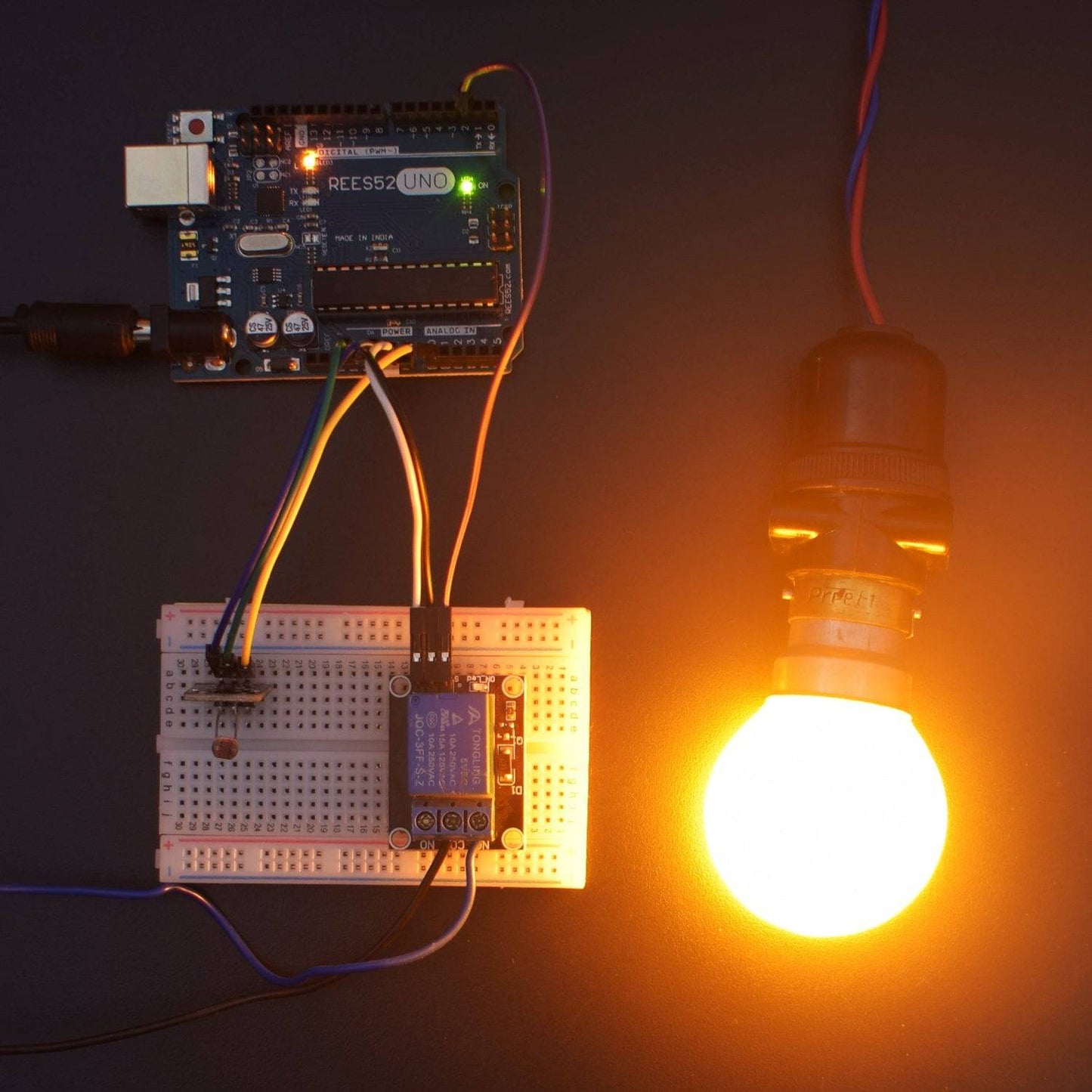

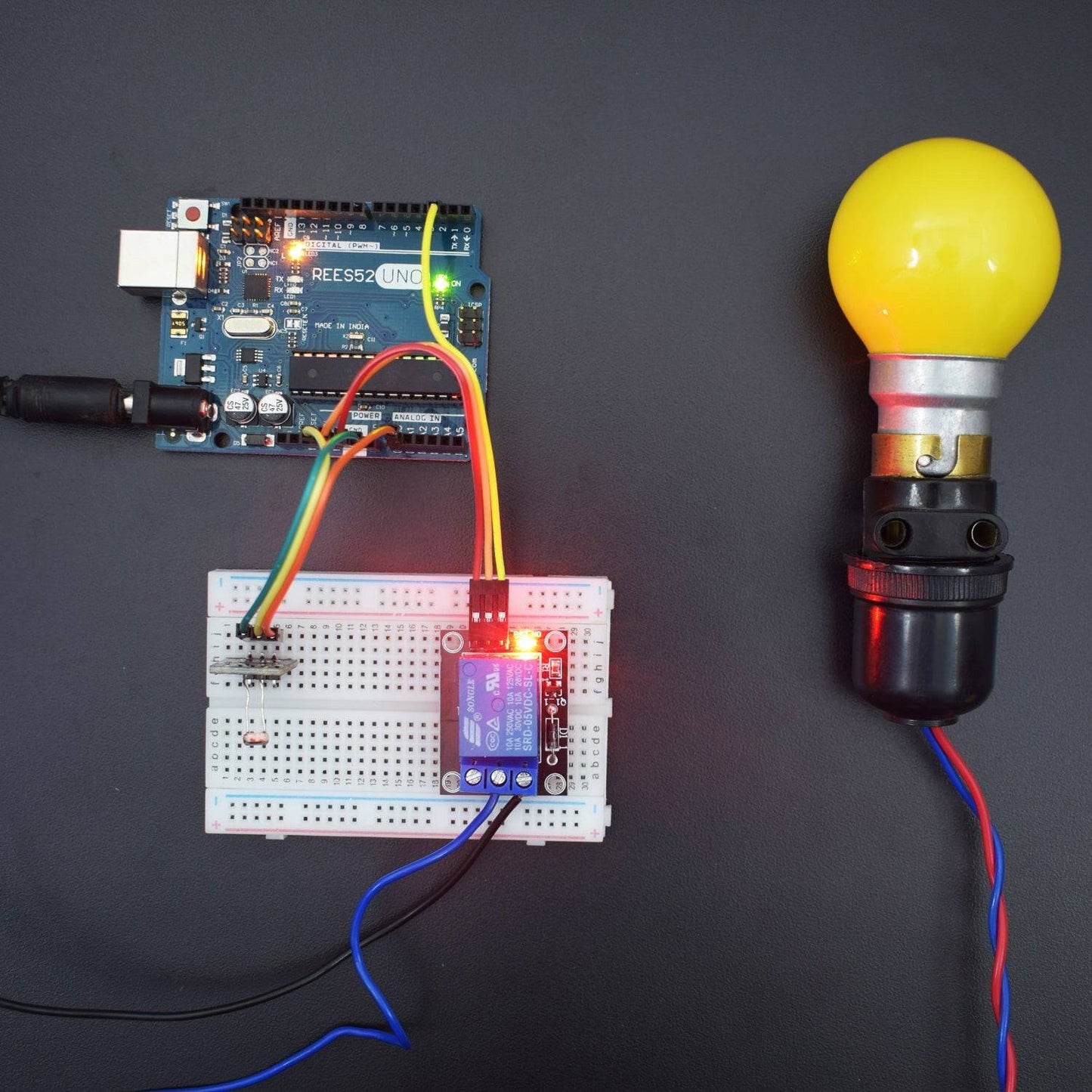
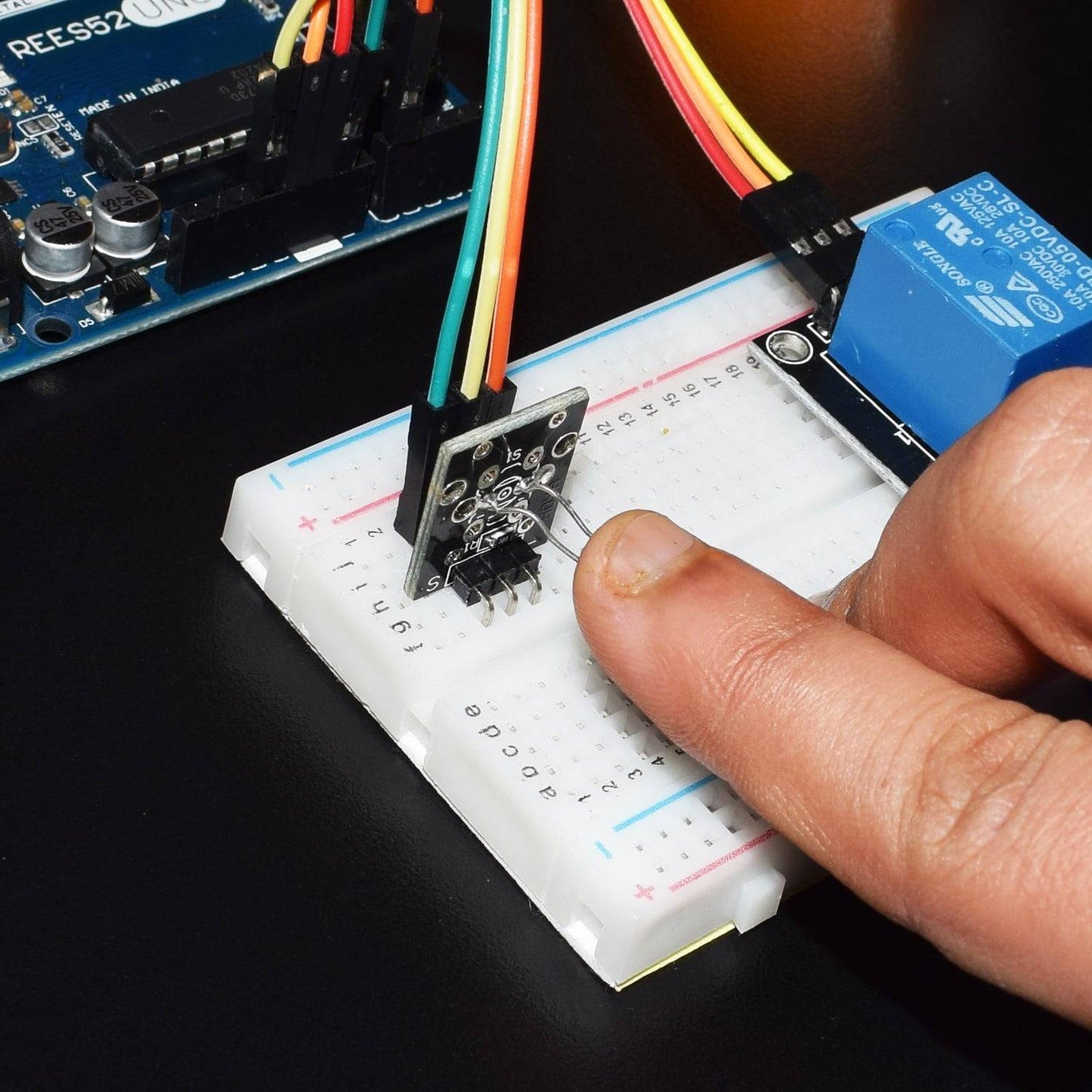
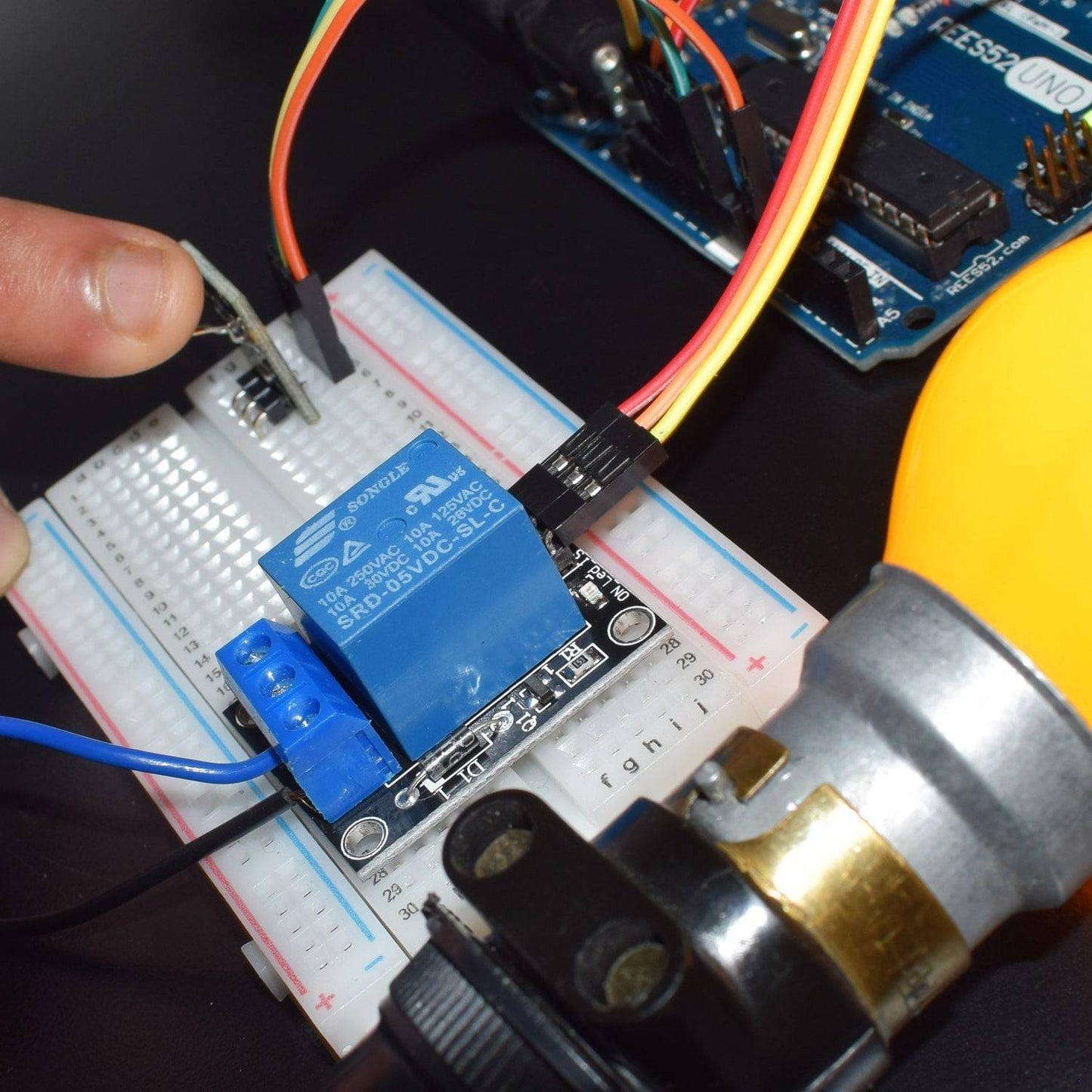
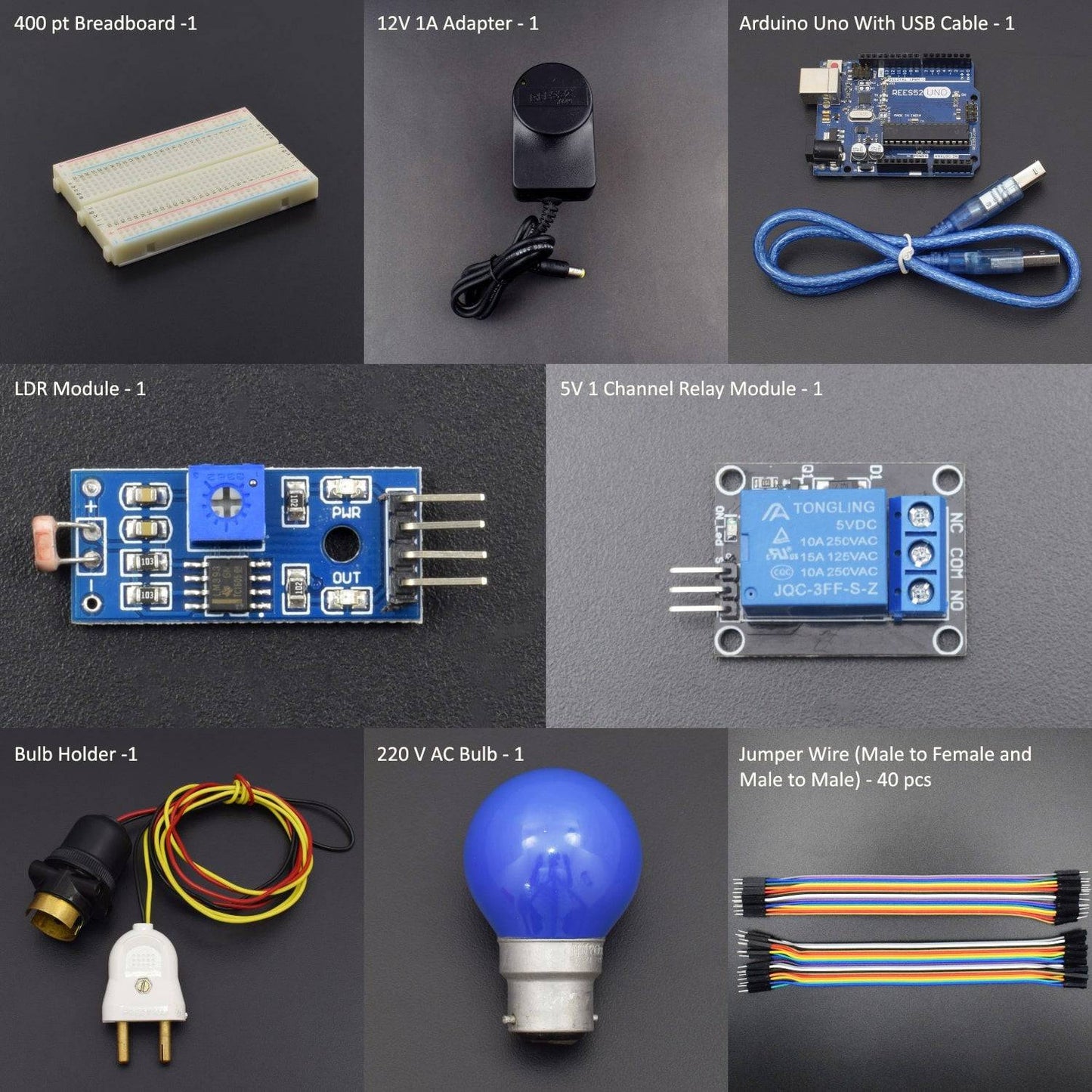

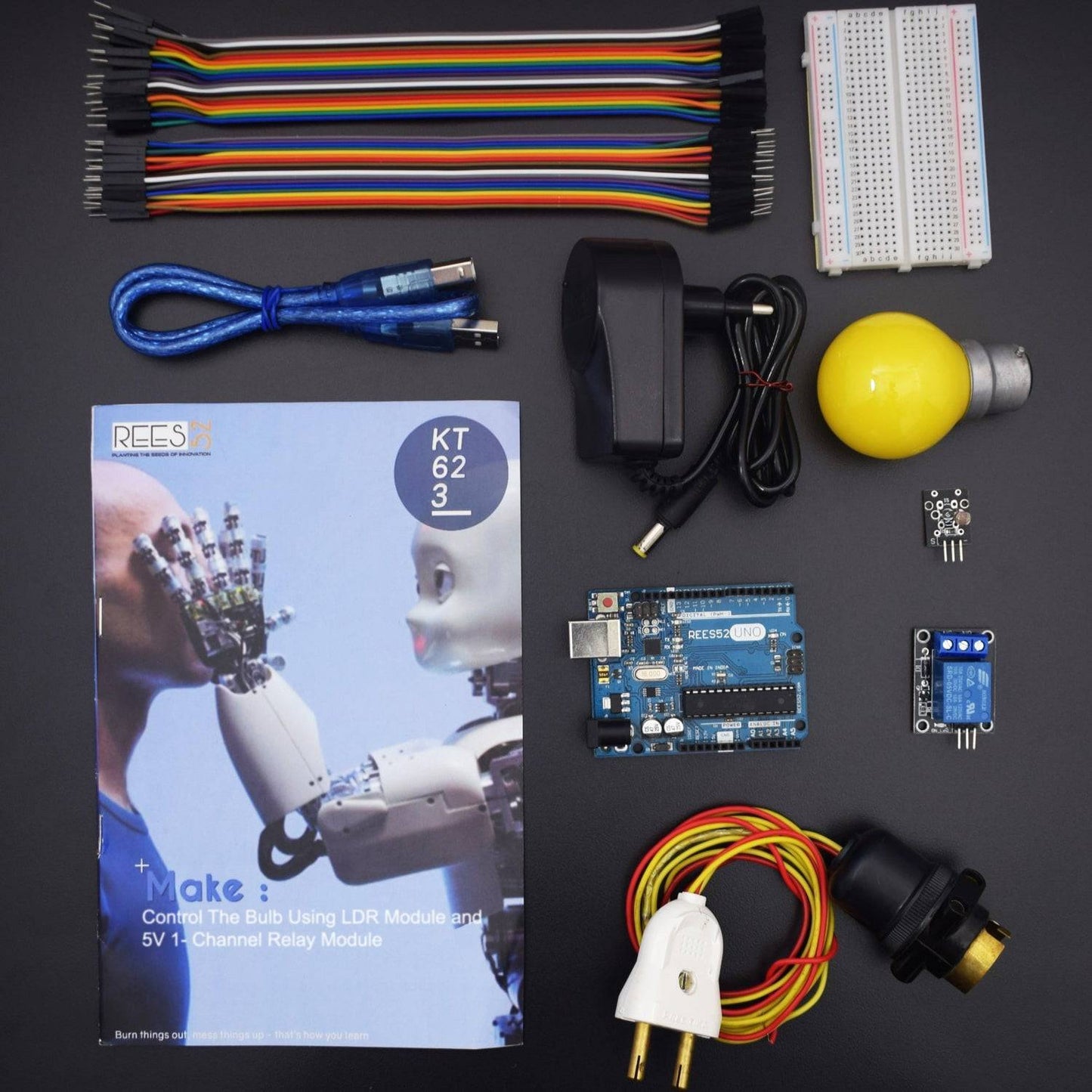

Hardware Required
- LDR Module - 1
- 12V 1A Adapter - 1
- Arduino Uno With USB Cable - 1
- Touch Sensor Module - 1
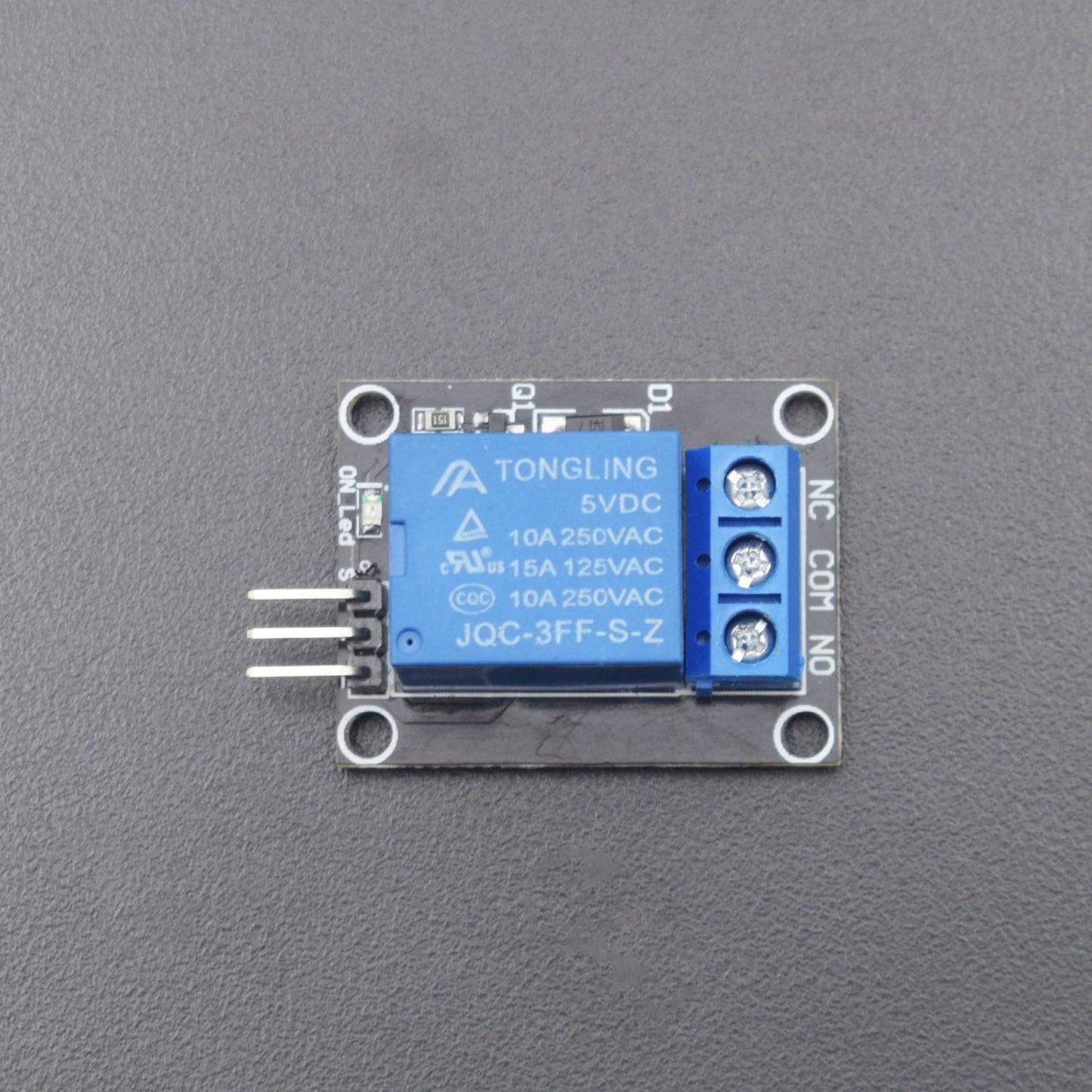
- 5V 1 Channel Relay Module - 1
- 220 V AC Bulb - 1
- Jumper Wire (male to female) - 40 pcs
- Jumper Wire (male to male) - 40 pcs
- Bulb holder -1
- 400 pt Breadboard -1
Introduction
In this project, we will be controlling the Bulb using LDR module which will glow as Light Intensity on LDR Module decreases.
HARDWARE REQUIRED
- LDR Module - 1
- 12V 1A Adapter - 1
- Arduino Uno With USB Cable - 1
- Touch Sensor Module - 1
- 5V 1 Channel Relay Module - 1
- 220 V AC Bulb - 1
- Jumper Wire (male to female) - 40 pcs
- Jumper Wire (male to male) - 40 pcs
- Bulb holder -1
- 400 pt Breadboard -1
SOFTWARE REQUIRED
Arduino IDE 1.8.5 (programmable platform for Arduino)
Click To Download: https://www.arduino.cc/en/Main/Software
SPECIFICATIONS
.LDR Module
An LDR is a component that has a (variable) resistance that changes with the light intensity that falls upon it. This allows them to be used in light sensing circuits.
LDR has no polarity just like a resistor. The resistance of LDR can be very easily measured by just connecting the two terminals of LDR to a Multimeter & set the Multimeter on resistance Mode. It consists of a photoresistor and a 10kΩ in-line resistor. The photo resistor’s resistance will decrease in the presence of light and an increase in the absence of it. The output is analog and determines the intensity of light.
- Operating Voltage: 3.3V to 5V
- Output Type: Analog

5V 1 Channel Relay Module
- Number of I/O Channels: 1
- Type: Digital
- Control signal: TTL level
- Max. Allowable Voltage: 250VAC/110VDC
- Max. Allowable Power Force: From C(800VAC/240W), From A(1200VA/300W)


CIRCUIT CONNECTION
- Connect GND of Relay with GND of Arduino Uno.
- Connect VCC of Relay with Pin 5V of Arduino Uno.
- Connect Pin Signal of Relay with Digital Pin 2 of Arduino Uno.
- Connect GND of LDR Module with GND of Arduino Uno.
- Connect VCC of LDR Module with Pin 3.3V of Arduino Uno.
- Connect Pin Signal of LDR Module with Analog Pin A0 of Arduino.
- Connect one terminal of Bulb (Blue Wire) with Pin NC (Normally Close) of Relay.
- Connect one terminal of Adapter with Pin C (Common) of Relay.
- Connect the other terminal of Bulb (Red Wire) with another terminal of the adapter.

CODE
Code for testing LDR Module:
https://drive.google.com/open?id=1FQww5oYpYGMmf3GpGB2OTeCaO-G5-3Q_
Code for working of LDR with Relay:
https://drive.google.com/open?id=1T1FjBq3GyI6ncL1DBt3eqplK-YZIPA5Q
WORKING
Welcome to the Arduino Based Project which consists of LDR Module and Relay. The basic functionality of LDR module is being described here. In order to detect the intensity of light or darkness, we use a sensor called an LDR (light dependent resistor). The LDR is a special type of resistor that allows higher voltages to pass through it (low resistance) whenever there is a high intensity of light, and passes a low voltage (high resistance) whenever it is dark. It is the project using an Arduino that automatically turn lights on when an LDR sensor detects darkness. Whenever a room gets dark due to a fused bulb or any other factors, a light bulb automatically turns on. You can even use this as an emergency lighting system. Use it to automatically turn a light on when there isn’t sufficient light in a room.
After connecting the LDR to your Arduino, you can check for the values coming from the LDR via the Arduino.
